Sustainable gardening is not a single product list or a rule that every lawn, fertilizer, container, or non-native plant is "bad." It is a site-specific way of reducing unnecessary inputs, protecting soil and water, supporting useful habitat, and choosing practices that can be maintained over time. The myths usually begin when a good idea gets turned into an absolute.
Myth Check: Native plants can be valuable but still need correct placement. Compost is useful but can be overapplied. "Organic" pesticides can still carry risks. Removing all lawn is not automatically sustainable. Rain barrels and drought-tolerant plants help only when they fit local rainfall, regulations, and site conditions.
Myth 1: A Sustainable Garden Must Be 100% Native
Native plants can support local ecological relationships and may be well adapted to regional conditions, but the phrase "native plant" covers thousands of species with very different needs. A wetland native planted on a dry slope is still the wrong plant for the site.
A more useful principle is to increase locally appropriate native and regionally adapted plants while avoiding invasive species and matching every selection to soil, light, water, mature size, and intended function. The EPA's GreenScaping guidance encourages planting for the site, conserving water, reducing yard waste, and using pesticides wisely rather than imposing one universal planting formula.
Better practice: Build plant diversity around your local climate and ecosystem goals. Use local extension, botanic-garden, or native-plant-society resources to verify which species are appropriate in your region.
Myth 2: Any Organic Product Is Environmentally Harmless
"Organic" can describe a production standard, an ingredient source, or a marketing category. It does not mean a substance has no toxicity, no non-target effects, or no application limits. Some naturally derived pesticides can harm beneficial insects or aquatic organisms if used incorrectly.
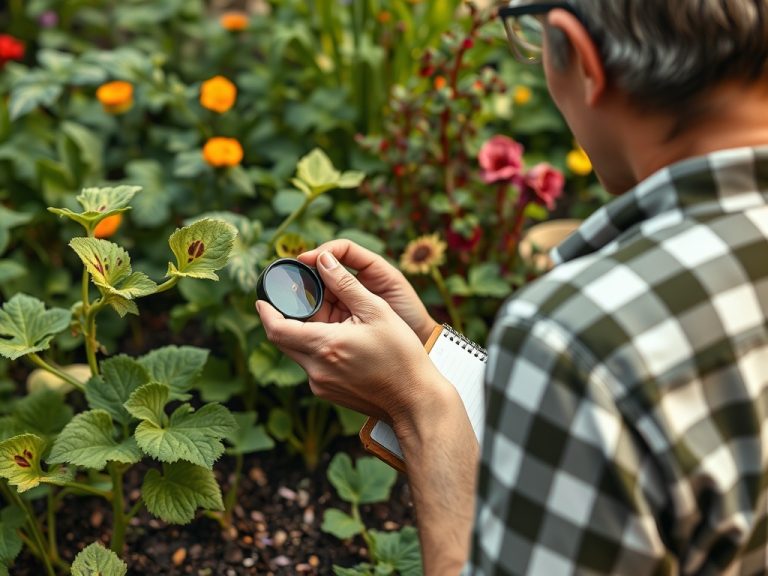
The sustainable choice is not simply "natural versus synthetic." It is to identify the problem, decide whether intervention is necessary, and choose a control with an appropriate risk profile for the target and setting. That is the logic behind integrated pest management.
Better practice: Treat pesticides as problem-specific tools, follow labels exactly, and favor prevention, monitoring, physical controls, resistant plants, and other nonchemical options when they can solve the issue.
Myth 3: Compost Can Never Be Overused
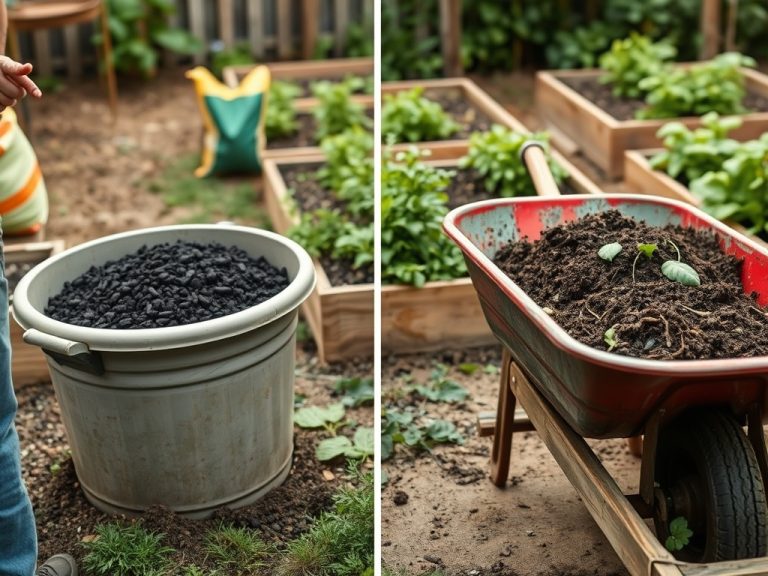
Compost contributes organic matter and can improve soil function, but repeated heavy applications can add more nutrients than plants need. This is especially relevant when compost is rich in phosphorus or salts, or when a garden already receives manure and fertilizer.
The EPA's home composting overview describes compost as a useful soil amendment, not as an unlimited input. Soil testing remains important because sustainable gardening is partly about matching amendments to actual need.
If you are choosing a source, Bagged Compost vs Homemade Compost: Is There a Difference? compares convenience, ingredient control, consistency, and application considerations.
Better practice: Use finished compost for a defined purpose and adjust the amount based on soil conditions rather than applying it automatically every season.
Myth 4: The Greenest Yard Has No Lawn at All
Turf can require substantial water, fertilizer, mowing, and weed control when it is poorly matched to climate or used across areas that do not need a durable walking surface. Yet lawn can also serve practical functions: play space, pet area, erosion-resistant groundcover, visual openness, or a surface for gathering.
The more useful question is how much lawn is functional. EPA WaterSense landscaping tips encourage water-smart design, including thoughtful turf placement and plants suited to local conditions.
A heavily shaded lawn that is constantly reseeded may be an obvious place to reduce turf. Can You Grow Grass in Heavy Shade? explains when shade-tolerant turf can work and when another groundcover may be more durable.
Better practice: Keep turf where it earns its space, improve its care, and convert low-function areas gradually rather than assuming total removal is the only sustainable option.
Myth 5: Drought-Tolerant Means Never Water
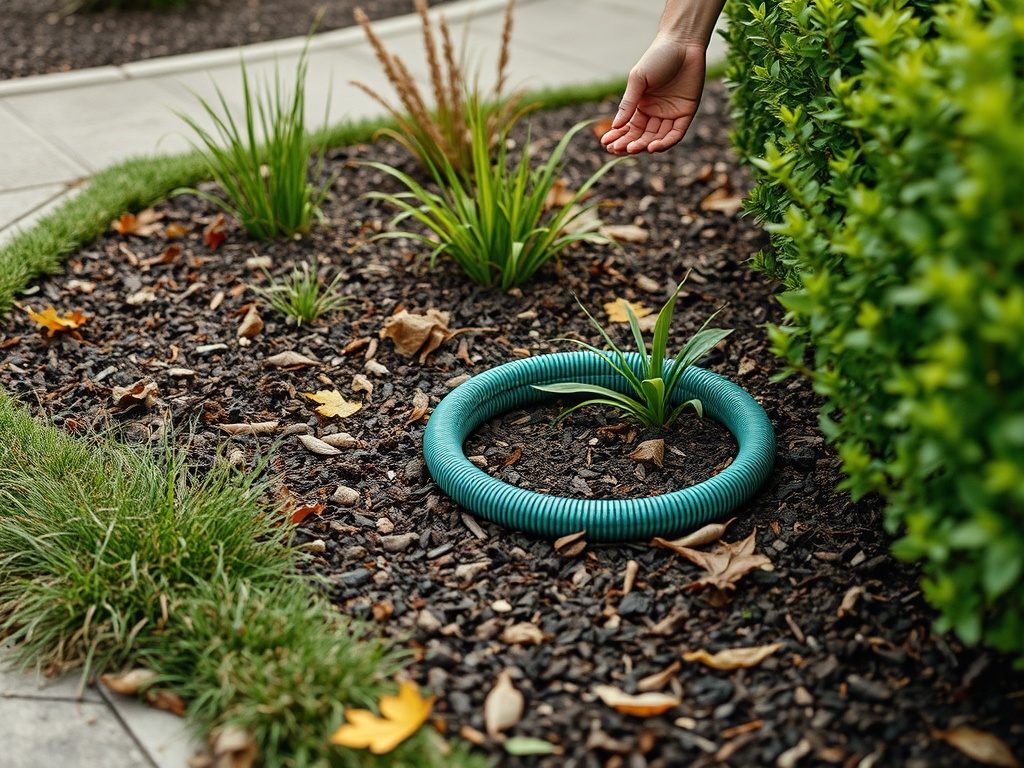
Drought-tolerant plants still need water during establishment, and even established plants can suffer during extreme heat or prolonged drought beyond their normal adaptation. Soil depth, root competition, wind, containers, and reflected heat all change water demand.
A plant described as drought-tolerant in one region may behave differently in another. Some species tolerate dry summers but need winter moisture; others are adapted to periodic drought but not desert conditions.
Better practice: Group plants by water need, water deeply enough to encourage useful root development, mulch where appropriate, and adjust irrigation to weather and soil rather than following a fixed calendar.
Myth 6: A Rain Barrel Solves a Runoff Problem
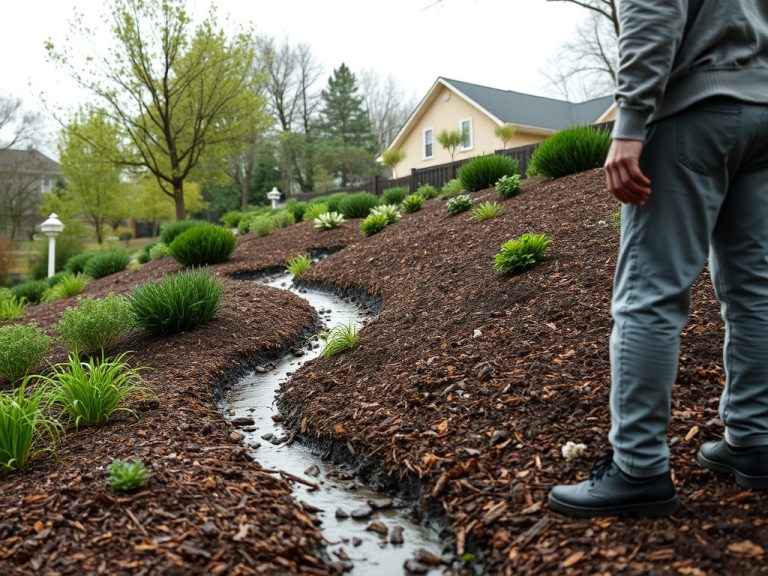
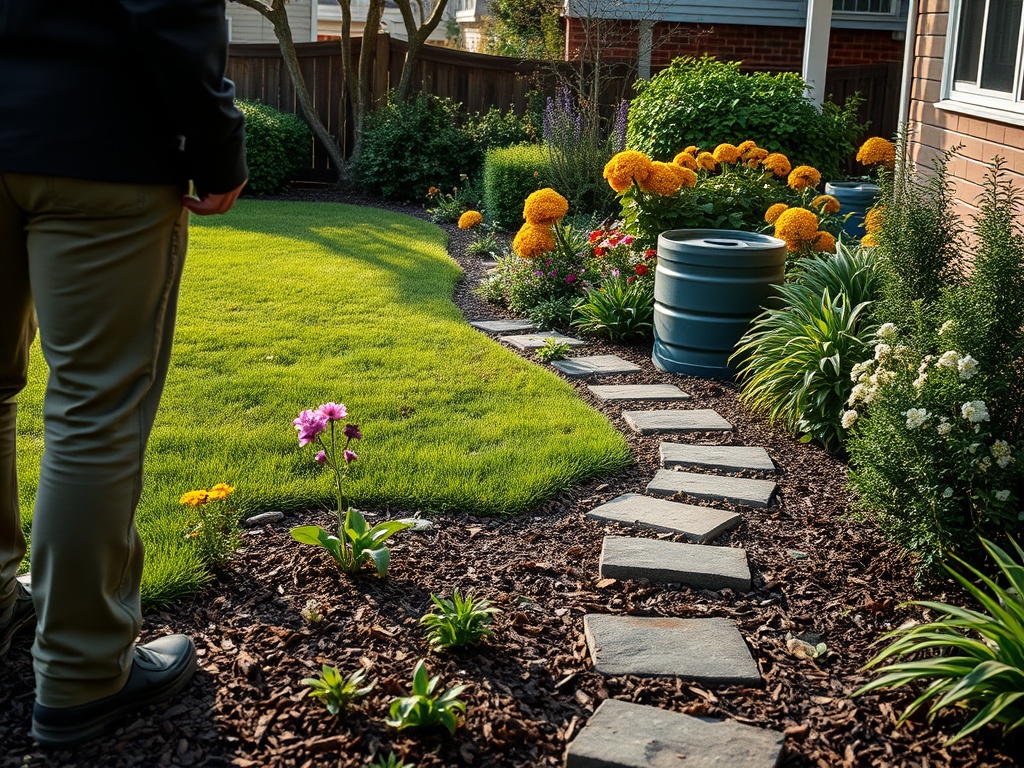
Rain barrels can capture roof runoff for later garden use, but a typical residential barrel has finite capacity. During large storms, overflow still needs a safe destination. Downspout placement, grading, soil infiltration, and overflow routing matter as much as the barrel itself.
On sloping properties, sending overflow to an unstable bed can worsen erosion. How to Prevent Runoff on Sloped Garden Beds explains why runoff control starts with the source and flow path.
Better practice: Treat rain capture as one part of a drainage plan. Confirm local rules for rainwater collection and route overflow away from foundations and vulnerable slopes.
Myth 7: Sustainable Gardens Must Look Wild
Ecological function and visual order are not opposites. A garden can use native plants, layered habitat, permeable surfaces, and water-smart design while still having clear edges, paths, repeated plant groups, and intentionally maintained sightlines.
The "messy versus manicured" debate often confuses style with function. A formal garden may use regionally adapted plants and efficient irrigation. A naturalistic garden can still be unsustainable if it relies on invasive species or constant replacement.
Better practice: Use design cues such as paths, edging, repeated masses, and seasonal maintenance to communicate intention while keeping the ecological functions you value.
Myth 8: More Pollinator Flowers Always Means More Sustainability
Flowers can support pollinators, but habitat involves more than blooms. Different species need nesting sites, host plants, shelter, water sources, and seasonal continuity. Pesticide exposure and landscape fragmentation also matter.
A garden packed with flowers that bloom for only a few weeks may provide less year-round value than a diverse planting with staggered bloom periods, grasses, shrubs, and undisturbed habitat areas.
Better practice: Plan for succession across the growing season and learn which plants support locally important pollinators and other beneficial wildlife.
Myth 10: Sustainability Is a One-Time Makeover
Landscapes are living systems. Trees mature, shade patterns change, soil organic matter shifts, rainfall varies, and family needs evolve. A garden that was efficient five years ago may need a new irrigation schedule or different planting density today.
Sustainability therefore works better as a maintenance process than as a one-time purchase. Observe, measure, adjust, and remove practices that no longer serve a clear purpose.
Put the Principles Ahead of the Labels
The most durable sustainable-gardening decisions tend to share a few traits: they fit the site, avoid unnecessary inputs, protect soil, manage water responsibly, reduce waste, and remain realistic for the people maintaining the space. Those principles are more useful than chasing a perfect "green" identity.
Choose one issue in your yard, such as irrigation waste, bare soil, unused lawn, or repeated pesticide use, and improve that first. Small site-specific changes are easier to evaluate and maintain than a wholesale redesign based on slogans.
Environmental note: Gardening practices, water restrictions, invasive-species rules, pesticide requirements, and rainwater regulations vary by location. This article is educational and should be paired with local extension and government guidance.[/