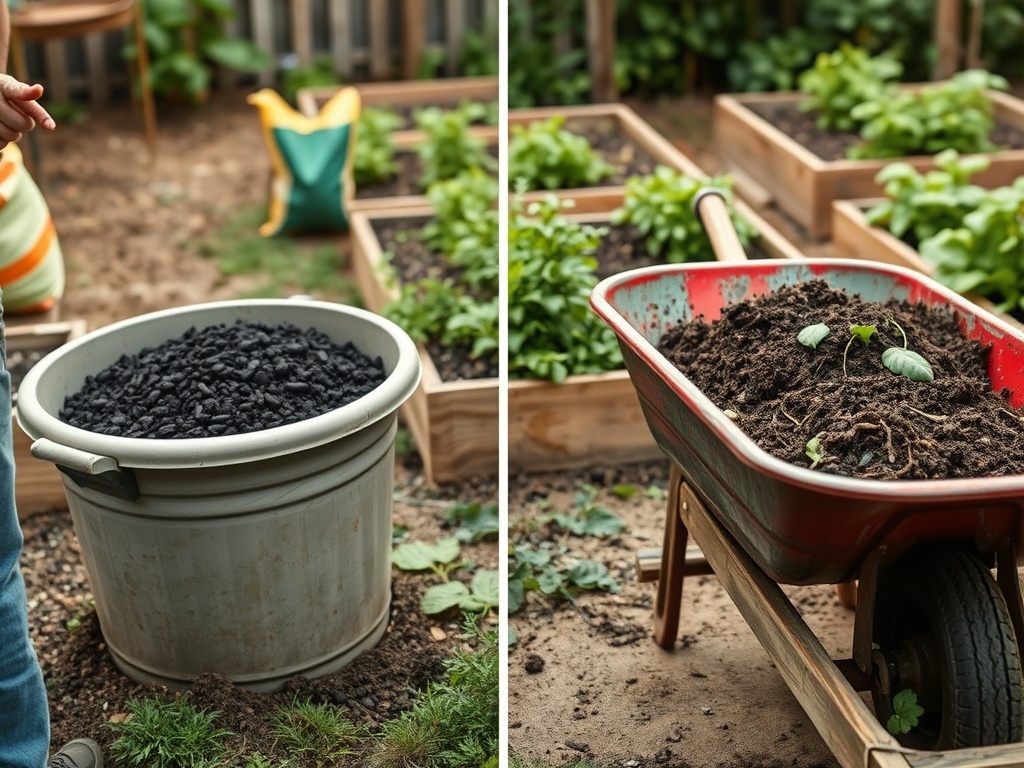
Bagged and homemade compost can both improve garden soil, but they differ in consistency, convenience, cost structure, traceability, and the amount of control you have over the ingredients. The better choice depends on how much material you need, how quickly you need it, what you are growing, and how confidently you can manage a home compost pile.
Compost Decision Brief: Choose bagged compost when you need a predictable, ready-to-use material in a limited quantity. Choose homemade compost when you have a steady stream of suitable organic material, space and time to manage decomposition, and a reason to recycle household or yard inputs. Many gardeners use both.
The Core Difference Is Control Versus Convenience
Commercial bagged compost is produced, screened, packaged, and sold as a finished soil amendment. Homemade compost is created from the materials available to you: leaves, plant trimmings, food scraps, and other suitable organic matter managed through decomposition.
Neither category is automatically "better." A high-quality commercial compost can be mature and consistent, while a poorly managed home pile can remain unfinished or contain troublesome weed seeds. Conversely, well-made home compost can be an excellent way to recycle organic material and build soil, while some purchased products may vary in feedstocks, texture, nutrient content, or maturity.
The U.S. Environmental Protection Agency describes home compost as a biologically stable soil amendment created from decomposed organic materials and explains that it can support soil health, water conservation, and nutrient cycling. Its home composting guidance is a useful starting point for understanding the process rather than treating compost as simply "fertilizer in a bag."
What You Actually Get in a Bag
Bagged compost offers one major advantage: you can buy it when you need it. That matters for a new raised bed, a container project, a small lawn repair, or a planting job that cannot wait for a home pile to mature.
Product labels may identify feedstocks such as composted manure, forest products, yard materials, or other organic inputs. Some products also provide laboratory or nutrient information. Read the label carefully because "compost," "garden soil," "potting mix," and "soil conditioner" are not interchangeable terms.
The trade-off is that you are paying for processing, packaging, transport, and convenience. Buying many bags for a large property can also create plastic waste and repeated handling.
What Homemade Compost Gives You Instead
Home composting turns suitable organic material that might otherwise leave the property into a resource you can return to the soil. You know what went into the pile, and you can adjust the blend of moist nitrogen-rich materials and drier carbon-rich materials as the pile develops.
The process requires space and attention. A pile that is too wet can become oxygen-limited and odorous. A pile that is too dry may decompose slowly. Large woody pieces take longer to break down than shredded leaves or small plant material. Food scraps must be managed in a way that does not attract pests.
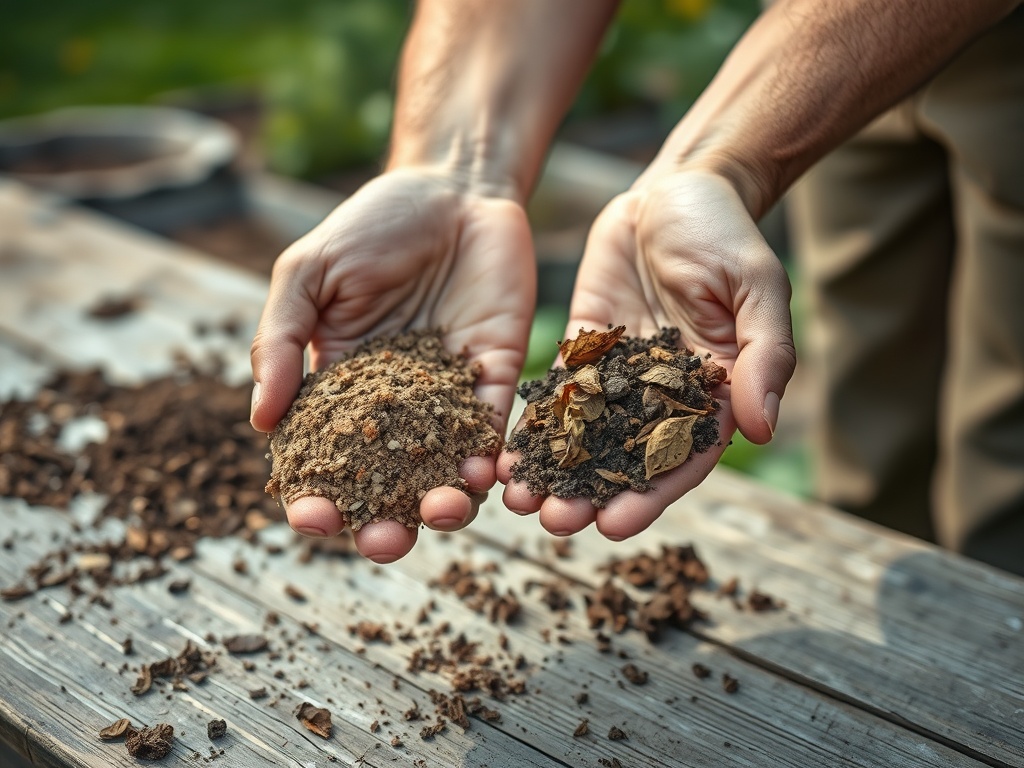
Finished compost should look and smell more like dark, earthy organic material than the individual ingredients you started with. If recognizable food or garden waste is still abundant, the material may simply need more time.
If you are also dealing with erosion or moving water, finished compost can be part of a larger soil-management plan, but it is not a substitute for controlling flow paths. See How to Prevent Runoff on Sloped Garden Beds for a separate look at slope stabilization and soil cover.
Performance Depends on Maturity and Application
Gardeners sometimes assume that darker compost or stronger-smelling compost is more potent. Appearance and smell alone do not establish nutrient value or maturity. Commercial compost can be tested, and home compost can also be analyzed if you need detailed information for a high-value crop or a soil with existing nutrient concerns.
The University of Minnesota Extension explains how compost reports can describe characteristics such as solids, organic matter, nutrients, and other properties. Its guide to interpreting compost test results is especially useful when you want evidence rather than assumptions about a material.
Compost should also be applied according to soil needs. More is not always better. Repeated heavy applications, especially of nutrient-rich composts, can contribute to nutrient imbalances. If the garden already has high phosphorus or salts, adding compost solely because it is "natural" may be counterproductive.
Compare the Two Options Side by Side
| Factor | Bagged Compost | Homemade Compost |
|---|---|---|
| Availability | Ready when purchased | Depends on decomposition time |
| Ingredient control | Limited to label and producer information | High if you manage all inputs |
| Texture | Often screened and consistent | Varies with feedstocks and screening |
| Quantity | Convenient for small to medium jobs | Useful when household/yard inputs are plentiful |
| Labor | Low after purchase | Requires collection and pile management |
| Packaging | Usually sold in bags | Can avoid retail packaging |
| Testing information | Sometimes available | Optional if you submit a sample |
| Best fit | Immediate projects and measured applications | Ongoing recycling and long-term soil building |
This table describes typical differences, not guaranteed quality. A specific product or compost pile should be judged on its actual characteristics.
Watch for Quality and Safety Issues
For purchased compost, check the label for intended use and any available quality information. If the material contains composted manure, follow product directions and food-garden guidance. For homemade compost, avoid adding materials that are unsuitable for your system, including pet waste from carnivorous animals, diseased material you do not know how to manage safely, or persistent herbicide-contaminated plant matter.
Home piles can also spread disease if unfinished material is moved between planting areas. The practical disease-identification steps in A Beginner FAQ on Garden Diseases and Treatments can help you decide when questionable plant debris should stay out of a basic backyard pile.
Be careful with weed seeds and invasive plants as well. A pile may not reach and maintain temperatures sufficient to kill every seed or propagule. Local extension guidance is useful for deciding which invasive or diseased materials should go to municipal green-waste systems rather than home compost.
A Simple Choosing Framework
Use bagged compost when you need a known quantity quickly, have little storage space, or want a more uniform screened material. Use homemade compost when you have suitable organic inputs, room for a pile or bin, and time to manage it. Combine the two when your home supply is not large enough for a project.
If your next project involves potting, propagation, or precise container culture, remember that finished compost is not automatically a complete potting mix. Containers need a medium with appropriate drainage, aeration, and structure. Likewise, in-ground gardens benefit from soil testing before repeated amendments.
For equipment-heavy gardening, a stable preparation surface can make screening and potting easier; Best Outdoor Work Tables and Portable Benches Compared can help you decide what type of work surface fits that job.
The Most Practical Answer for Most Gardens
The difference is real, but it is not a contest. Bagged compost buys convenience and, in some cases, more consistency or documented testing. Homemade compost gives you direct control over inputs and a productive use for suitable organic waste. Quality, maturity, and correct application matter more than the label "store-bought" or "homemade."
Start by estimating how much compost your next project actually requires, then compare that need with the amount of finished material you already have. That keeps the decision tied to the garden rather than to assumptions about which source is inherently superior.
Educational disclaimer: Compost properties vary with feedstocks, processing, storage, and local conditions. For food-production, nutrient-management, pesticide-residue, or contamination concerns, use product instructions and local extension or laboratory guidance.[/