The best bodyweight workouts for athletes combine strength, control, mobility, and repeatable power without turning every session into exhaustion. Use simple movements, sport-specific pacing, and clear progression so home training supports performance instead of replacing practice.
No-Gym Training Brief
Key takeaway: The best bodyweight workouts for athletes combine strength, control, mobility, and repeatable power without turning every session into exhaustion. Use simple movements, sport-specific pacing, and clear progression so home training supports performance instead of replacing practice.
The Performance Goal Behind No-Gym Training
Bodyweight workouts help athletes maintain strength, coordination, balance, and conditioning when a gym is unavailable. They are useful during travel, busy school or work weeks, bad weather, off-season transitions, and return-to-routine periods. The aim is not to copy a weight-room program without weights. The aim is to train qualities that carry into sport: stable positions, controlled landing, trunk strength, single-leg balance, and repeated effort.
General activity guidance from the CDC is a good health baseline, but athletes need sessions that connect movement quality to sport demands. A home workout should make practice easier, not leave the athlete too sore to move well.
How to Build a Bodyweight Session
A good session has four parts: warm-up, strength, athletic control, and a short conditioning finish. The warm-up raises temperature and rehearses movement. Strength work challenges the legs, upper body, and trunk. Athletic control includes deceleration, balance, change of direction, or landing mechanics. The finisher builds repeatable effort without destroying form.
| Training Block | Sample Movements | Performance Purpose |
|---|---|---|
| Warm-up | World’s greatest stretch, skips, lunges, arm circles | Prepare joints and raise temperature |
| Strength | Squats, split squats, push-ups, hip bridges | Build usable control |
| Athletic control | Single-leg balance, lateral bounds, stick landings | Improve stability and landing quality |
| Finisher | Tempo runs, mountain climbers, shuttle patterns | Support repeat efforts |
Workout 1: Strength and Control
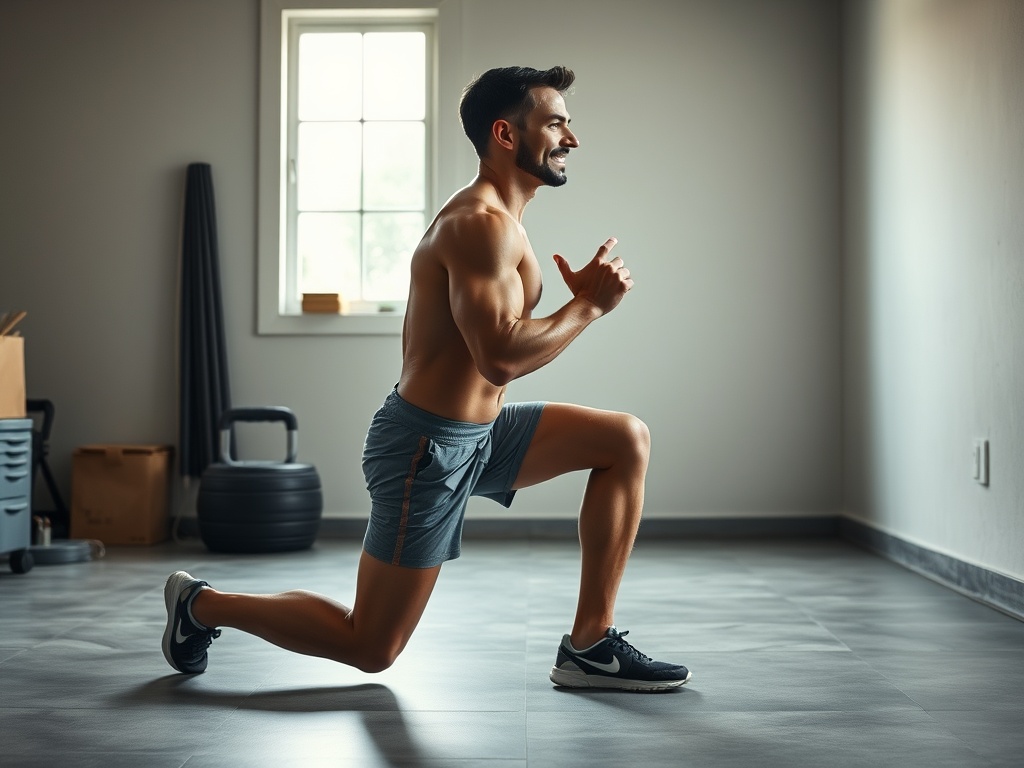
Complete three rounds at a smooth pace: ten squats, eight push-ups, eight reverse lunges per side, twelve hip bridges, twenty seconds of side plank per side, and six single-leg balance reaches per side. Rest as needed to keep form clean. This session suits field and court athletes who need stable hips, trunk control, and repeatable lower-body strength.
Progress by slowing the lowering phase, adding a pause, or increasing range of motion. Do not rush to advanced variations if basic positions are unstable. A shaky split squat often tells you more than a dramatic jump exercise.
This routine pairs well with the article on skill and conditioning priorities because bodyweight work should support the performance problem you are actually trying to solve.
Workout 2: Speed Support Without Equipment
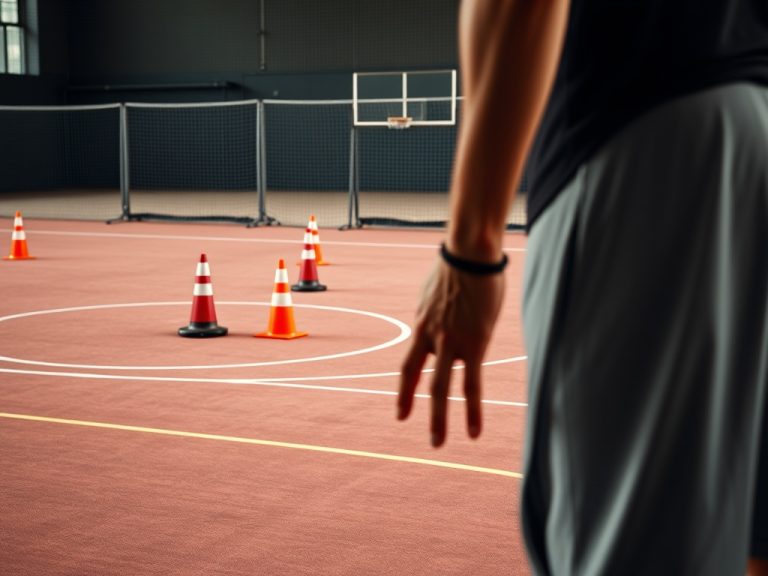
Use a short-space circuit: marching A-skips, wall drives, quick feet in place, lateral shuffle and stick, forward-backward acceleration over five yards, and controlled deceleration. Work for fifteen to twenty seconds, rest for forty to sixty seconds, and repeat for four to six rounds. The goal is crisp movement, not breathless chaos.
Athletes often mistake fast feet for useful speed work. Real speed needs posture, force into the ground, and the ability to stop or redirect. If the knees cave in, the torso collapses, or landings are loud, slow down and rebuild control.
Workout 3: Travel-Day Maintenance
When time and space are limited, use a fifteen-minute session: two minutes of mobility, three rounds of eight squats, eight incline push-ups, eight hip hinges, ten dead bugs, and ten calf raises, then two minutes of easy breathing and stretching. This is not a max-effort session. It is a body reminder that preserves routine.
Athletes who feel unusually flat should compare fatigue signs with rest needs rather than tougher motivation before adding more volume.
Fueling and Recovery Decisions
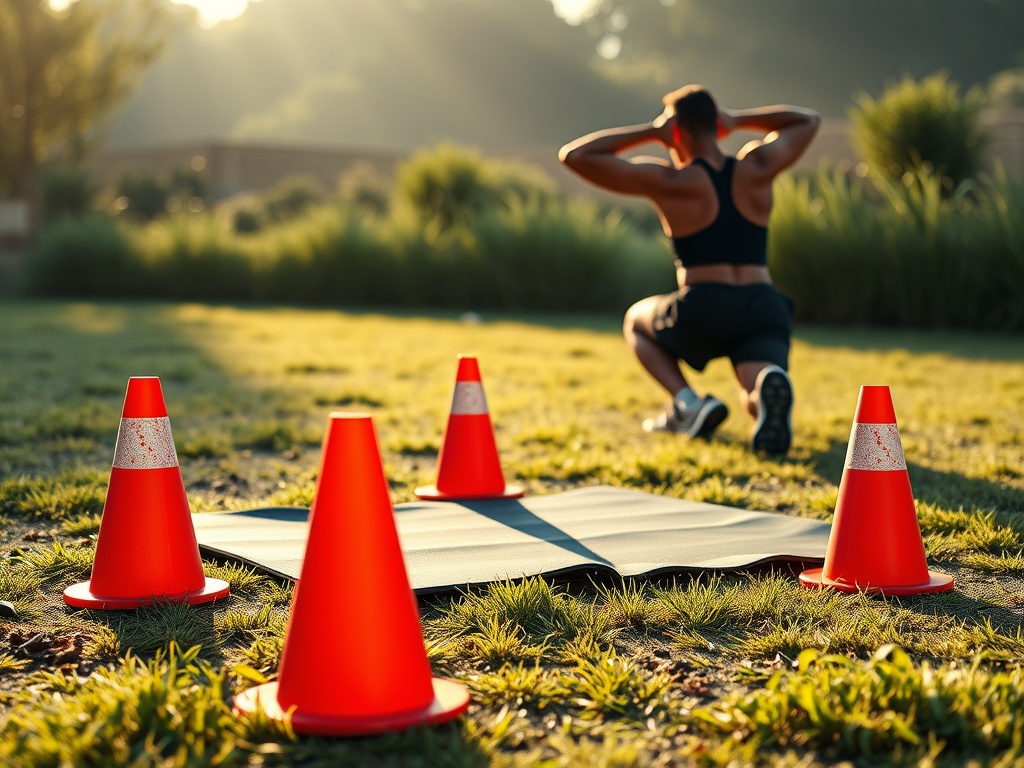
No-gym training still needs recovery. Eat enough to support the session, hydrate, and leave space between hard workouts and demanding practices. If the athlete is training during a busy week, a moderate session completed consistently is better than a punishing session that disrupts sleep, school, work, or sport practice.
Soreness should not be the main scoreboard. Useful bodyweight training often feels controlled during the session and noticeable the next day without sharp pain or movement loss. If soreness changes technique at practice, the session was probably too hard or too unfamiliar.
Red Flags and Common Mistakes
Stop or modify movements that create sharp pain, dizziness, numbness, or joint instability. Avoid high volumes of jumps if landing mechanics are poor. Be careful with internet challenges that reward speed over control. Athletes also need to avoid random exercise piles. Ten unrelated moves do not automatically create a performance plan.
A healthy support system matters here too. In youth sports, coach-parent-athlete communication can help prevent home training from becoming another pressure source.
A No-Gym Routine Worth Repeating
The best bodyweight workout is the one that fits your sport, schedule, and recovery status. Choose movements that improve positions you need in play, progress slowly, and leave enough energy for practice. Your next step is to pick one of the three sessions above and repeat it twice this week with clean form as the main standard.
Progressions That Do Not Require Equipment
Progression can come from tempo, range, stability, density, or complexity. A squat can become a slow squat, then a pause squat, then a split squat, then a rear-foot-elevated variation if the athlete is ready. A push-up can move from an incline to the floor, then to slower tempo or shoulder-tap variations. The key is earning the next version with control.
Conditioning can progress by shortening rest, adding rounds, or making movement more sport-specific. Avoid changing every variable at once. If reps, speed, rest, and exercise difficulty all increase together, it becomes hard to know what helped or caused soreness.
How to Combine Home Work With Practice
Place harder bodyweight sessions away from the most demanding practices or games. Use lighter mobility and control work on the day before competition. After a heavy match, choose walking, stretching, or easy movement instead of another hard circuit. The workout should fit the season, not compete with it.
How to Keep Motivation High at Home
Home workouts can feel repetitive because there is no crowd, coach, or scoreboard. Use small targets: complete all reps with quiet landings, hold each plank without twisting, or finish intervals at the same pace as the first round. These targets create focus without needing a gym atmosphere.
Athletes can also pair training with a simple log. Record the session, energy level, and one movement cue. The log does not need to be complex. Its purpose is to reveal patterns, such as better sessions after sleep or poorer control after heavy practices.
When Bodyweight Training Is Not Enough
Bodyweight work has limits. Athletes who need maximal strength, heavy power development, or advanced rehabilitation may eventually need equipment, coaching, or medical guidance. That does not make home training weak. It simply means the best plan changes as the athlete’s goal changes. Use bodyweight sessions to preserve consistency, then add resources when performance demands require them.
A good session should leave the athlete feeling more prepared for the next sport practice. If home training repeatedly reduces speed, coordination, or enthusiasm, lower the volume and return to cleaner basics.