Exterior wood lasts longer and looks better when you control moisture, keep debris from trapping water, inspect for early damage, clean gently, and renew an appropriate finish before the surface deteriorates badly. Decks, railings, fences, steps, trim, and outdoor furniture all weather differently, so maintenance should respond to the wood species, construction details, exposure, and existing coating.
Wood-Care Sequence: Inspect first, clean only as aggressively as needed, let the wood dry, repair loose or decayed components, prepare failed coatings, and apply a finish that is compatible with the wood and previous treatment. Fix water traps before blaming the finish.
Moisture Movement Is the Main Story
Wood gains and loses moisture as surrounding conditions change. That movement can cause swelling, shrinking, checking, raised grain, coating failure, and conditions that favor decay. Oregon State University Extension's discussion of wood and moisture relationships explains why moisture affects dimensional stability, finish adhesion, and susceptibility to staining, decay, and insects.
Sunlight adds another stress. Ultraviolet exposure degrades the surface, while repeated wet-dry cycles accelerate weathering. Horizontal boards generally take more punishment than vertical siding or fence boards because water can sit on them longer.
The first maintenance principle is therefore not "apply more stain." It is to help the wood shed water and dry.
Inspect the Places Water Lingers
Walk the property after rain and look for areas that remain wet longer than surrounding wood. Common trouble spots include deck-board ends, stair treads, railing intersections, fence posts near soil, planter contact points, furniture feet, shaded corners, and joints packed with leaves.
Probe suspicious soft areas gently with an appropriate tool, but do not damage sound wood. Look for cracks that hold water, loose fasteners, popped nail heads, rust stains, peeling coatings, algae or mildew growth, and boards that no longer feel structurally solid.
If a deck, stair, guardrail, porch, or balcony component appears structurally compromised, stop treating it as a cosmetic maintenance project. A qualified contractor or inspector should evaluate safety-critical parts.
Remove Debris Before You Reach for Cleaner
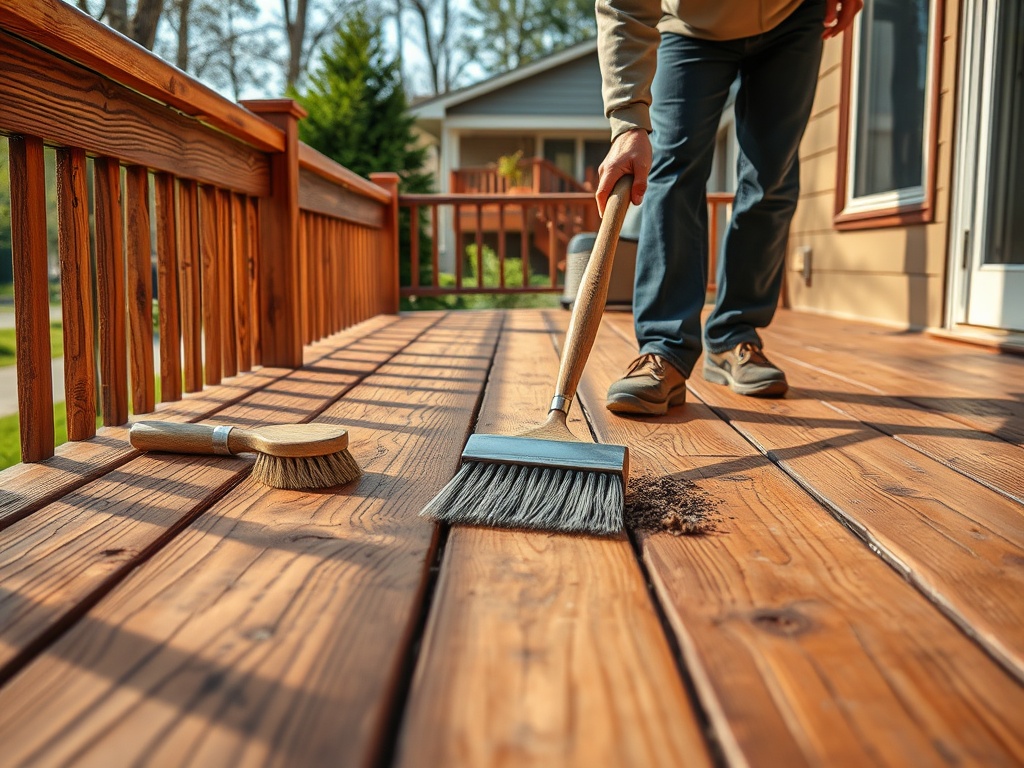
Leaves, soil, pollen, needles, and plant debris hold moisture against wood. Sweep or brush them away regularly, especially from gaps between deck boards and from corners where a wall meets a horizontal surface.
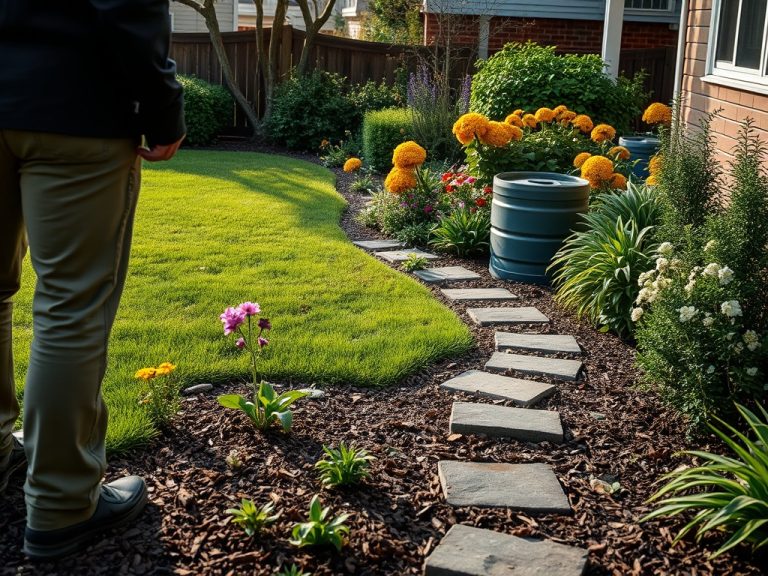
Keep planters elevated so air can circulate beneath them, and use saucers or feet thoughtfully so they do not create permanent wet spots. Trim vegetation that presses continuously against fences or siding while preserving the plant's health.
This housekeeping can matter as much as washing because it reduces the time wood stays damp after rain or irrigation.
Clean With the Least Aggressive Method That Works
Start with water, a soft or medium brush appropriate for the surface, and a cleaner recommended for the wood and coating. Test any product in an inconspicuous area. Follow label directions for dilution, dwell time, protective equipment, and rinsing.
High-pressure washing can rapidly remove dirt, but it can also erode soft wood fibers, raise grain, drive water into joints, or damage coatings when used incorrectly. If you use a pressure washer, select settings and technique appropriate for wood and keep the nozzle moving. Do not assume "more pressure" equals better cleaning.
Avoid mixing cleaners. Chlorine-containing products, acids, ammonia, and other chemicals can create dangerous reactions or damage materials when combined.
Let the Surface Dry Before Finishing
Applying a coating over damp wood can reduce adhesion and trap moisture. Drying time depends on weather, shade, board thickness, species, construction, and the coating system. A calendar rule such as "wait exactly 24 hours" is not reliable for every project.
Follow the finish manufacturer's moisture and weather requirements. If the project is large or the weather has been persistently wet, a moisture meter can provide better information than touch alone.
For homeowners building basic maintenance capacity, DIY Tool Kit Essentials for New Homeowners covers practical tools that support inspection, minor repair, measuring, and surface preparation.
Choose a Finish for Exposure and Maintenance Style
Exterior wood finishes vary in how much film they build, how much grain they show, and how they fail. Penetrating water-repellent finishes and stains often weather gradually, while film-forming coatings can peel when adhesion is lost or moisture gets behind them.
The USDA Forest Products Laboratory has published guidance on finishes for wood decks, noting the stresses decks experience from weather and the role finishes can play in reducing problems such as checking, raised grain, and mildew.
Compatibility matters. Do not apply a new product until you know what coating is already present and what preparation the manufacturer requires. Switching systems may require stripping, sanding, or other preparation.
Prepare Failed Areas Instead of Coating Over Them
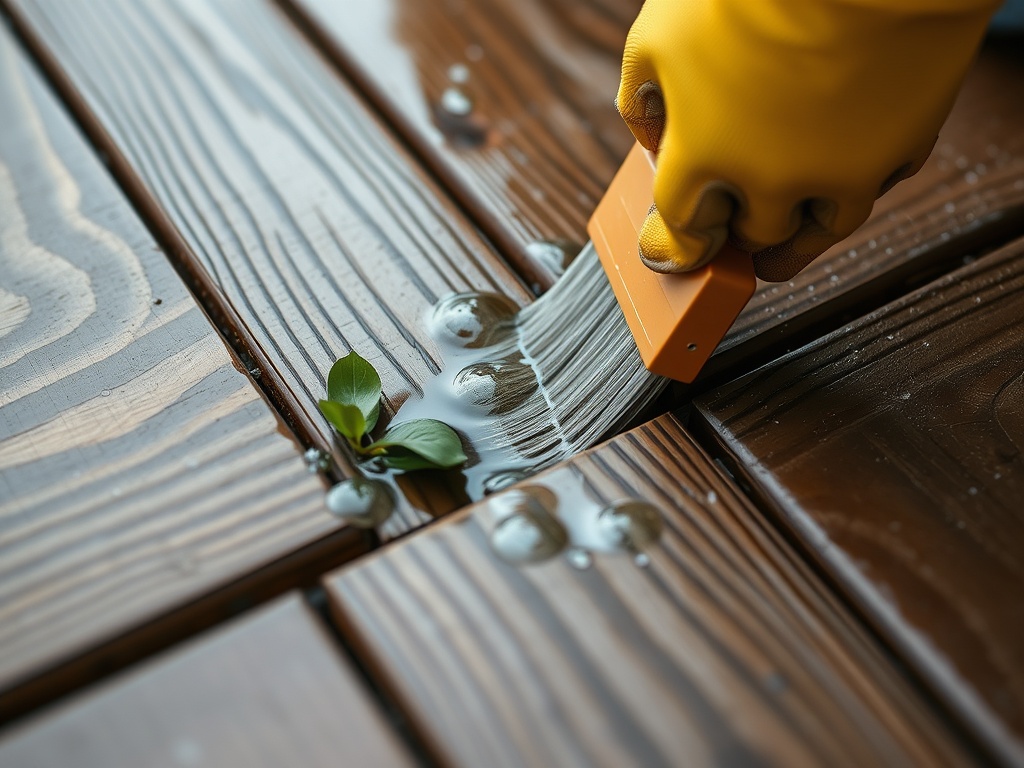
A fresh coat cannot make loose paint or failing stain sound again. Remove peeling material to a stable edge using methods suitable for the coating and substrate. Sand rough transitions where appropriate and remove dust before recoating.
Older homes may have lead-based paint on exterior components. Disturbing lead paint can create hazardous dust and chips, and U.S. federal rules can apply to renovation work on pre-1978 housing. If the coating age is uncertain, do not sand or scrape aggressively until you have checked applicable lead-safety guidance.
Replace severely decayed or structurally damaged wood rather than hiding it under filler and paint. Cosmetic fillers have limited value where the substrate can no longer carry the required load.
Fix Design Details That Keep Re-Wetting the Wood
Maintenance becomes much easier when the construction drains properly. Check that deck gaps are not blocked, fence rails shed water, flashing directs water away from wall assemblies, and irrigation does not repeatedly spray wood surfaces.
A finish can slow moisture entry, but it cannot compensate for standing water or chronic leakage. If water from the landscape is reaching a deck or fence because of grade and runoff, correct the site condition. How to Prevent Runoff on Sloped Garden Beds explains ways to manage surface flow without simply pushing water elsewhere.
Shade can complicate drying, too. Dense plantings may create attractive privacy while reducing airflow. Prune or reposition vegetation when practical rather than allowing branches to remain pressed against wood.
Use a Seasonal Inspection Rhythm Instead of a Fixed Recoat Date
Manufacturers may give expected maintenance intervals, but exposure varies too much for one schedule to fit every surface. South- and west-facing wood may weather faster in some climates; shaded horizontal surfaces may stay wet longer; coastal and freeze-thaw environments create different stresses.
Know When the Project Moves Beyond Maintenance
Call a professional when you find widespread rot, loose railings, significant deck movement, damaged ledger connections, failing stairs, insect damage affecting structural members, or moisture intrusion at the house. Those conditions may require repair design, not just cleaning and refinishing.
Likewise, exterior trim deterioration near windows, doors, or roof intersections can indicate flashing or building-envelope problems. Repainting the visible wood without correcting water entry is likely to produce another failure.
Protect the Wood by Protecting Its Drying Cycle
The best exterior-wood routine is not complicated: keep surfaces clean, help them dry, repair damage early, and maintain a compatible finish based on condition. The exact product matters less than correct preparation and moisture control.
Choose one exposed surface and inspect it after the next rain. If water is lingering because of debris, planters, irrigation, blocked gaps, or failed coating, correct that cause before scheduling a cosmetic refresh.
Home-maintenance disclaimer: Structural wood, elevated decks, guards, stairs, flashing, lead-based paint, and exterior electrical components can create significant safety or regulatory issues. This article is educational and does not replace an on-site contractor, inspector, engineer, or hazardous-material professional.[/