
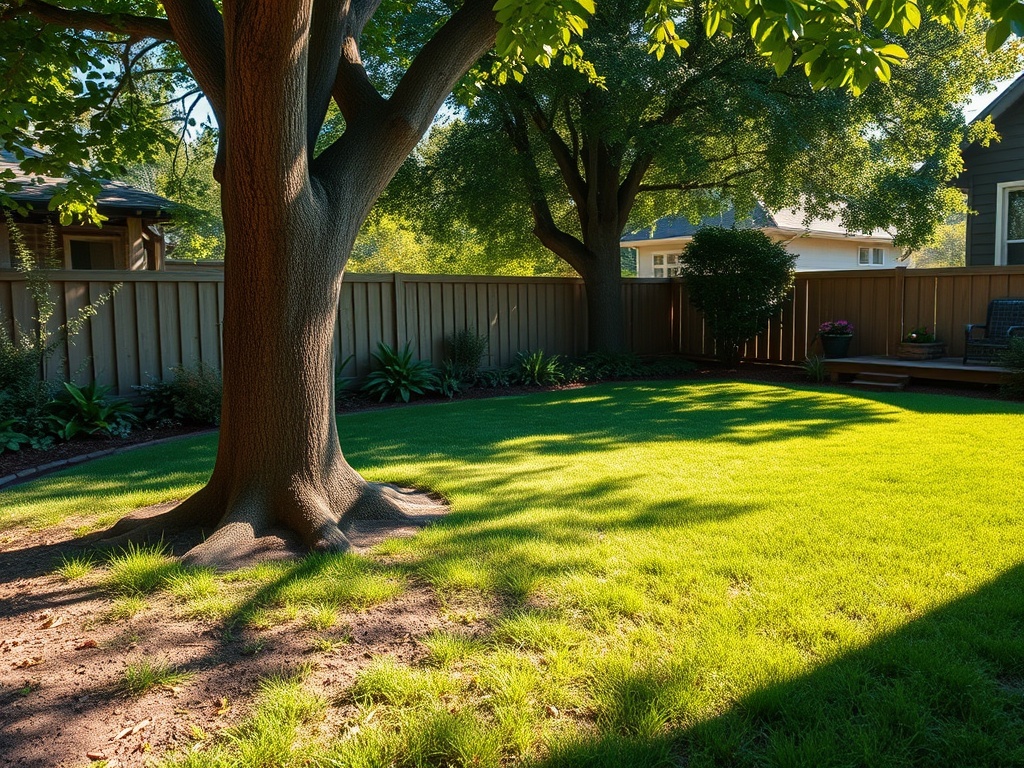
Yes, grass can grow in some shaded yards, but heavy shade changes the goal from "perfect lawn" to "the right turf in the right place." Where sunlight is extremely limited, even shade-tolerant grasses may thin out, and a groundcover, mulch, or planting bed can be the more durable choice.
Shade-Lawn Snapshot: Start by measuring how much direct and filtered light the area actually receives. Choose shade-tolerant turf for your region, reduce traffic, mow a little higher, avoid excess fertilizer, and be willing to replace turf where tree roots and deep shade make long-term grass cover unrealistic.
Why Shade Makes Turf So Difficult
Grass is a plant, and every turf species needs enough light to make the carbohydrates that support leaves, roots, recovery, and disease resistance. In deep shade, turf produces less energy while still competing with nearby trees and shrubs for moisture and nutrients. The result is often a lawn that stays thin, stretches toward available light, recovers slowly from foot traffic, and remains damp for longer after rain or irrigation.
Shade is not one condition. An open north-facing yard, dappled shade beneath high tree canopies, and a narrow strip between buildings can all receive very different amounts and qualities of light. Before reseeding, watch the site at several times of day and across more than one season. Deciduous trees may allow spring sun but create dense summer shade, while evergreen canopies can keep an area dark throughout the year.
The University of Minnesota Extension notes that fine fescues tolerate shade better than many other cool-season turfgrasses. That does not mean they thrive without light; it means they are often better adapted to reduced-light conditions than species that prefer full sun.
Start With the Site Instead of the Seed Bag
Before buying a "shade mix," check the conditions that are actually limiting the lawn. Light is usually the largest factor, but drainage, compacted soil, tree-root competition, poor air circulation, and repeated traffic can make a shaded area much harder to maintain.
A useful site review includes:
- Light pattern: Note hours of direct sun and whether the remaining light is bright, filtered, or very dim.
- Soil moisture: Check whether the soil dries rapidly because of tree roots or stays wet because evaporation is slow.
- Drainage: Look for puddling, moss, surface crusting, or soil that remains sticky well after rainfall.
- Traffic: Identify paths created by pets, children, wheelbarrows, or routine shortcuts.
- Tree canopy: Consider whether selective pruning by a qualified professional could safely improve filtered light without harming the tree.
If the area is also sloped and water moves quickly across it, the strategies in How to Prevent Runoff on Sloped Garden Beds can help you think about soil protection before attempting turf establishment.
Choose Turf by Climate and Shade Tolerance
There is no universal "best grass for shade" because turf selection depends on climate. In cool-season regions, fine fescues are commonly used in shade-tolerant mixtures. In warmer climates, the shade tolerance of warm-season turf species varies considerably, and local extension recommendations are a better guide than national seed-label claims.
Read the seed label rather than relying only on front-of-bag marketing. A mix can contain several species because shade levels, soil conditions, and maintenance vary across one lawn. For sod, ask which cultivar is being supplied and whether it is recommended for the amount of light on your property.
Do not assume that more seed compensates for too little light. Overseeding can temporarily make an area look fuller, but seedlings still need enough light and a suitable root zone to persist.
Establish Shaded Grass With Less Disturbance
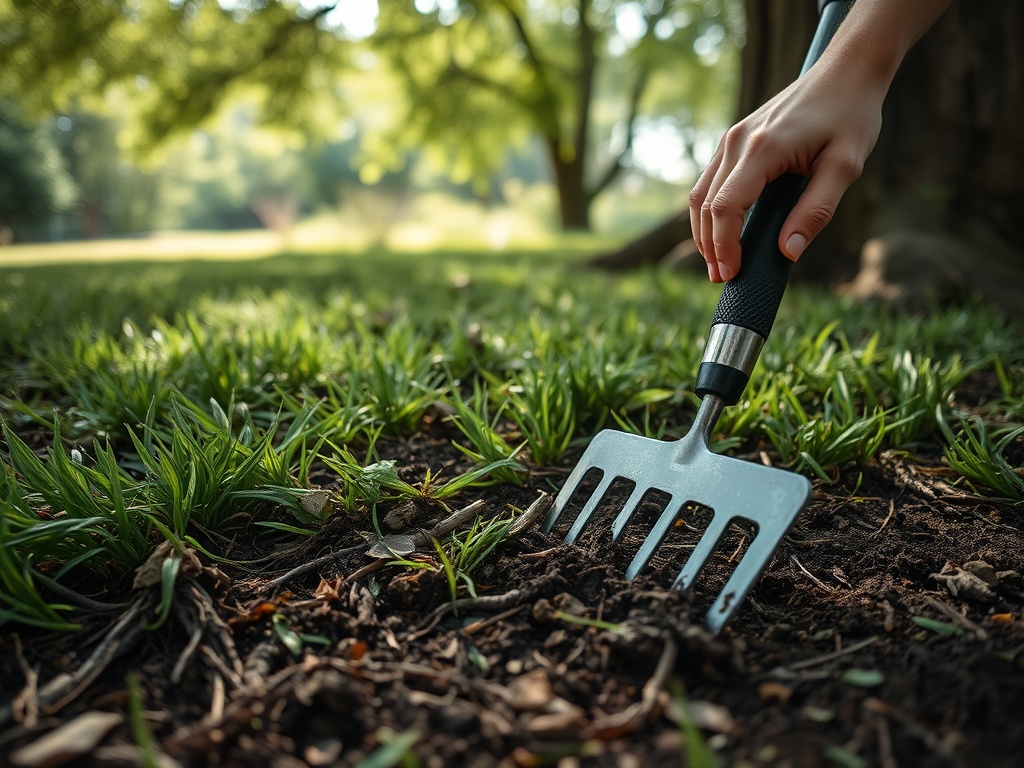
Prepare the area carefully, especially when tree roots are present. Aggressive tilling around mature trees can damage roots, while piling deep topsoil over existing roots can also create problems. In many shaded lawns, light surface preparation and overseeding are safer than major grade changes.
A practical sequence is:
1. Remove loose debris and weak thatch. Rake gently enough to expose small areas of soil without tearing up major roots.
2. Address compaction where appropriate. Core aeration may help on compacted turf, but avoid damaging large surface roots.
3. Seed at the best local time. Timing depends on grass type and region. For cool-season lawns, late summer is often favorable because soil is warm and weed pressure may be lower than in spring.
4. Maintain even surface moisture during germination. Frequent light watering may be needed at first; reduce frequency as seedlings establish.
5. Limit traffic. New shaded turf is less able to recover from wear, so temporary barriers can protect the area during establishment.
Mow Higher and Feed More Conservatively
Shaded turf generally benefits from retaining more leaf surface because leaves are the plant's solar collectors. That often means mowing toward the higher end of the recommended range for the turf species rather than scalping it to match sunny sections. Never remove a large share of the leaf blade at one mowing.
Fertilizer is another common mistake. Thin turf in shade can tempt homeowners to apply extra nitrogen in an attempt to force growth. Excess nitrogen may produce soft leaf growth without solving the underlying light limitation. A soil test can help determine whether nutrients or pH actually need correction.
Watering also requires a different mindset. Shade can slow evaporation, yet large trees can pull substantial moisture from the same soil. Check the root zone before irrigating instead of watering shaded turf on the same automatic schedule as sunny lawn. EPA guidance on environmentally responsible lawn care also emphasizes working with site conditions rather than relying on unnecessary chemical inputs.
Know When Grass Is the Wrong Groundcover
A successful garden is not required to have turf everywhere. If grass repeatedly thins despite appropriate species selection and careful maintenance, the site may be telling you that lawn is not the best use of that space.
Alternatives can include shade-adapted groundcovers, woodland-style beds, mulch under mature trees, stepping-stone paths, or a combination of plants and permeable surfaces. Selection should reflect your climate, soil, drainage, foot traffic, pets, and local invasive-species guidance. A non-turf solution can also reduce the cycle of reseeding, fertilizing, and repairing a patch that remains fundamentally light-limited.
For broader design inspiration, Outdoor Living Trends for 2026 explores how homeowners are treating outdoor areas as functional zones rather than forcing one surface type across the entire yard.
A Better Test for Success
Judge a shade lawn by durability and fit, not by whether it looks identical to turf in full sun. If the grass maintains reasonable cover, tolerates normal use, and does not require constant intervention, it may be successful even if it is less dense than the rest of the lawn. If it continues to decline, redesigning the area is often more practical than adding inputs.
Your next step is simple: map the light for a week, identify the turf species already present, and compare those conditions with guidance from your local extension service before reseeding.
Informational note: Lawn recommendations vary by climate, turf species, soil, tree health, and local pesticide or fertilizer rules. This article is educational and is not a substitute for site-specific horticultural, arboricultural, or regulatory advice.[/