
Tendons and other connective tissues generally become more resilient through appropriately dosed mechanical loading, recovery, and gradual progression. They do not need to be protected from all stress; they need stress that is challenging enough to stimulate adaptation without repeatedly exceeding the tissue's current capacity.
TL;DR Build connective-tissue capacity slowly. Use consistent resistance training, progress load in small steps, keep sudden spikes in volume or intensity under control, and treat persistent pain or loss of function as a reason for assessment rather than a cue to push harder.
Tendons adapt, but not on the same timetable as motivation
Muscle soreness can change quickly and cardiovascular fitness can improve noticeably within weeks, which sometimes encourages people to raise training load faster than tendons tolerate. Tendon adaptation is real, but it is influenced by loading magnitude, duration, training history, age, injury history, and the specific tissue involved.
A systematic review and meta-analysis of tendon adaptation to mechanical loading found that tendons respond to training and that loading magnitude appears to be an important factor. Another systematic review of increased loading and tendon properties also supports the idea that repeated mechanical loading can change tendon structure and mechanical properties. These studies do not provide one universal protocol for every person or every tendon, but they support progressive loading rather than avoidance.
Use the capacity-versus-demand model
Think of tissue capacity as what you can currently tolerate and recover from. Training demand is the combination of load, repetitions, speed, range of motion, frequency, impact, and novelty. Problems often appear when several of those variables rise together.
For example, a runner may add hill sprints, longer mileage, and faster shoes in the same week. A lifter may switch to deeper range of motion, add heavy eccentrics, and increase weekly sets at once. Even if each change is reasonable by itself, the combined jump can be more than the tissue is prepared to handle.
Progress one major stressor at a time
- Load: increase resistance while keeping volume and exercise selection stable.
- Volume: add a small number of sets or repetitions while keeping load similar.
- Range: gradually work into deeper or longer muscle-tendon positions if appropriate.
- Speed or impact: introduce faster running, jumping, or plyometrics after a base of strength and tolerance.
- Frequency: add another exposure only when the existing schedule is well tolerated.
This does not mean progression must be mathematically perfect. It means you should be able to identify what changed when symptoms appear. That makes the training plan easier to adjust.
Strength training is a central tool
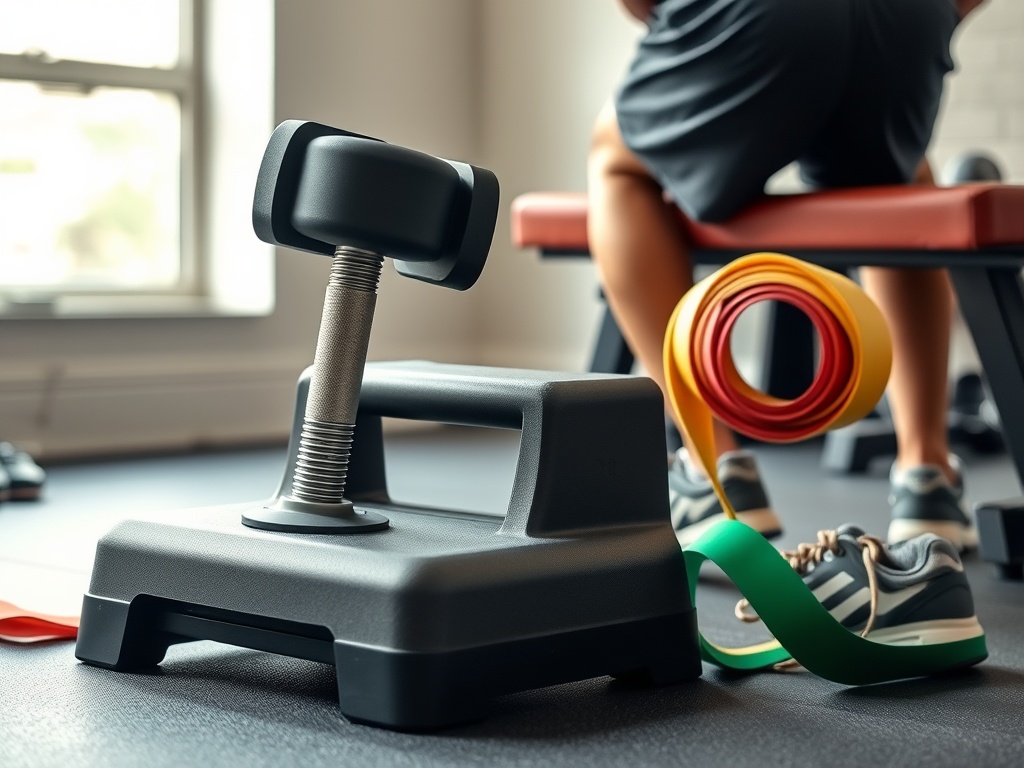
Heavy slow resistance, isometric loading, eccentric work, and other resistance approaches are used in different tendon rehabilitation and performance contexts. The appropriate choice depends on the tendon, symptoms, sport, and clinician's plan. For a healthy person building general resilience, the main requirement is consistent loading through movements that gradually become more demanding.
A warm-up can help you rehearse those loads without unnecessary fatigue. If your program includes heavy compound lifts, the best warm-up for heavy strength sessions offers a practical ramping structure. If cardio is also part of your week, be careful not to hide a large increase in running or jumping volume inside what looks like “extra conditioning.”
Pain needs context, not a single rule
Pain is not a direct meter of tissue damage, and some rehabilitation programs intentionally include tolerable symptoms. At the same time, that does not make every painful session safe. Severe pain, sudden injury, swelling, bruising, weakness, loss of function, or symptoms that rapidly worsen deserve professional evaluation.
For persistent tendon pain, a physical therapist, sports medicine physician, or other qualified clinician can help determine whether the problem is actually tendon-related and how loading should be modified. Self-diagnosing every ache as tendinopathy can delay appropriate care for other conditions.
Recovery supports adaptation
Connective tissue is part of a whole-body training system. Sleep, adequate energy intake, sufficient protein and micronutrients, and rest between demanding sessions support recovery. Supplements are not a substitute for progressive loading and adequate nutrition. Claims that one powder or collagen product can “repair tendons” should be treated cautiously unless they are supported by evidence and fit your medical context.
If you are simultaneously trying to lose weight, avoid making the energy deficit so aggressive that training quality and recovery collapse. Use resistance training as an anchor rather than piling several major stressors together. A steadier plan also makes it easier to interpret changes in soreness, performance, and recovery from week to week.
Watch for load spikes disguised as normal life
Training logs often miss activities such as moving furniture, long travel days, extra walking on vacation, recreational sports, or hours of gardening. These can increase total tissue demand even though they are not “workouts.” If a tendon becomes irritable after an unusually active week, review the whole week rather than only the gym program.
The same idea applies to endurance fueling and fatigue. An under-fueled long session can change mechanics and perceived effort late in the workout. If long cardio is part of the plan, how to fuel longer cardio sessions without upsetting your stomach can help reduce avoidable stress from poor fueling.
A practical progression framework
Choose two to four exercises that load the tissues relevant to your sport or daily life. Perform them consistently for several weeks. Progress one variable when the current dose feels technically solid and recovery is predictable. Keep at least one easier session or day between the most demanding exposures when needed.
If symptoms appear, reduce the variable most recently increased instead of abandoning all movement. For example, keep the exercise but reduce load, range, speed, or volume. Then rebuild as tolerance returns. This preserves training continuity while lowering demand.
Match exercise selection to the activity you want to tolerate
General strength is useful, but tissue demands are specific. A runner eventually needs tolerance to repeated impact and faster force production; a climber needs repeated gripping and pulling; a field-sport athlete needs acceleration, deceleration, and direction changes. Build from controlled resistance toward the speed, range, and frequency of the real task rather than assuming gym strength automatically transfers to every demand.
This is also why returning from injury should usually include a staged progression back to the actual sport or work task. A tendon that tolerates slow resistance in the gym may still need time before it tolerates repeated sprinting, jumping, or high-volume manual work.
Think in months, not heroic sessions
Tendon resilience comes from accumulated, recoverable loading. There is no single workout that makes connective tissue durable, and there is no badge for progressing faster than your current capacity. Build strength, add impact or speed gradually, recover, and seek assessment when symptoms are persistent or function is declining.