
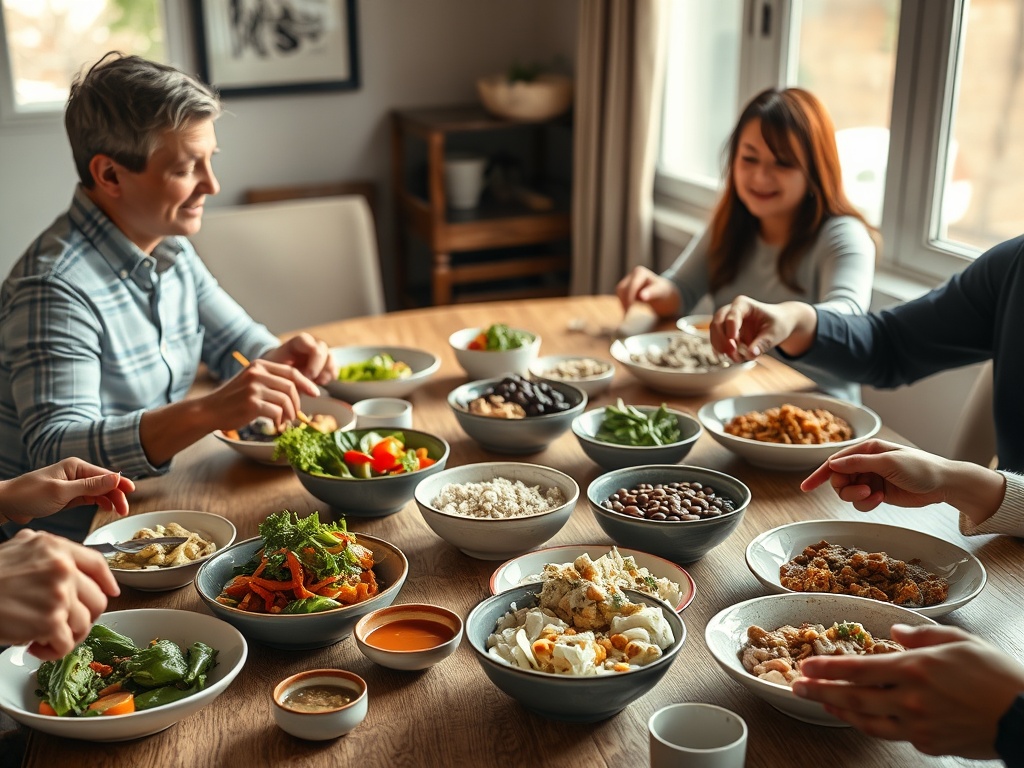
Yes. You can eat in a way that supports your health without forcing everyone in the household to eat an identical menu. The most sustainable approach is usually to build shared meals from flexible components, keep a few reliable foods available, and make small substitutions rather than cooking completely separate dinners every night.
TL;DR Aim for a shared base meal with optional add-ons. Keep vegetables, protein, whole grains or other preferred starches, fruit, and practical staples available, then let family members customize portions, sauces, toppings, and sides.
Healthy eating does not require one family menu
Households often contain different preferences, appetites, schedules, cultural foods, allergies, sports needs, and health goals. Trying to make every person follow the same plate can create unnecessary conflict. A better goal is a meal structure that gives each person enough choice while still making nutritious options easy to reach.
The federal MyPlate vegetable guidance emphasizes variety and recognizes fresh, frozen, canned, cooked, and raw vegetables as options. The MyPlate protein foods guidance similarly includes a wide range of animal and plant protein sources. That flexibility is useful in real families because “healthy” does not have to mean one recipe.
Use the shared-base method
Choose a meal that can be assembled rather than defended. Tacos, grain bowls, pasta with separate toppings, baked potatoes, sandwiches, stir-fries, breakfast-for-dinner, and sheet-pan meals all work because family members can change the final combination.
- Base: rice, potatoes, pasta, tortillas, bread, oats, or another staple everyone will eat.
- Protein: chicken, eggs, fish, beans, lentils, tofu, yogurt, or another household favorite.
- Produce: one or two vegetables or fruit options, prepared simply.
- Flavor: sauces, cheese, herbs, salsa, dressings, or condiments served separately.
- Optional extras: richer sides, desserts, or snack foods can still fit without becoming the only foods available.
This format lets one person emphasize vegetables and protein while another takes more starch, sauce, or a different topping. It also reduces the social message that one plate is “good” and another is “bad.”
Plan around what your family already likes
A healthy meal plan that nobody eats is not useful. Start with accepted foods and improve the environment around them. If the family likes burgers, add a vegetable side and fruit, or use a bean-based option for anyone who prefers it. If they like pasta, keep the pasta and add protein plus a vegetable that can be mixed in or served separately.
The MyPlate meal-planning guidance recommends checking what you already have, writing down meals, and choosing recipes based partly on time and family preferences. That is a practical strategy because household eating is a logistics problem as much as a nutrition problem.

Avoid the four mistakes that create food conflict
Cooking two full dinners every night
This may work temporarily, but it can become exhausting. Whenever possible, share the main ingredients and change the final assembly. Batch-cooked proteins, grains, chopped vegetables, and sauces can be recombined without making two entirely separate meals.
Making your health goal everyone else's rule
If you are trying to lose fat, improve blood pressure, manage training nutrition, or simply eat more produce, that does not automatically mean your partner or children need the same portions or targets. Keep your goal focused on your own choices unless a clinician has advised household-wide changes for a medical reason.
Labeling foods as clean, bad, or forbidden
Moral language can make meals more tense and does not teach practical decision-making. It is more useful to talk about frequency, portion, balance, preference, and how a food fits the rest of the day.
Changing too many foods at once
A refrigerator full of unfamiliar ingredients often creates waste. Add one or two reliable changes at a time: a frozen vegetable everyone tolerates, a different breakfast, or a protein option that makes lunches easier.
Make your plate flexible, not fragile
If a meal is pizza, you can eat pizza. Add a salad or fruit if you want more produce, choose an amount that fits your hunger, and move on. If dinner is takeout, choose a combination that leaves you satisfied rather than trying to create a “perfect” order. Health is shaped by patterns over time, not by making every family meal look identical.
For someone combining nutrition goals with training, how to lose fat while strength training three days a week offers a useful framework for keeping a modest calorie deficit without turning family meals into a separate diet. If your household includes a lifter, the best warm-up for heavy strength sessions is another reminder that performance goals often require consistency in the training plan rather than extreme food rules.
Use household systems instead of willpower
Keep a short list of default breakfasts, lunches, and dinners that require little negotiation. Stock convenient staples such as frozen vegetables, canned beans, eggs, yogurt, fruit, whole-grain or preferred breads, rice, and easy proteins based on your family's tastes and needs. Put foods you want to eat more often where they are visible and easy to prepare.
You can also create a “one person chooses, everyone customizes” rotation. One family member chooses the meal theme, and each person chooses their own toppings or side. This spreads the decision burden while preserving flexibility.
When different needs require more planning
Food allergies, celiac disease, kidney disease, diabetes, eating disorders, swallowing problems, and other medical conditions can change what is safe or appropriate. In those situations, family flexibility still matters, but individualized guidance from a qualified clinician or registered dietitian may be necessary.
For most households without those constraints, the practical target is simpler: create meals with several nutritious components, preserve foods people genuinely enjoy, and reduce the number of separate decisions required each day. That approach is more likely to survive busy weeks than a rigid menu.
Convenience foods can make the plan more realistic
Healthy family eating does not require cooking every ingredient from scratch. Frozen vegetables, canned beans, rotisserie chicken, microwaveable grains, bagged salad, plain yogurt, pre-cut fruit, and other convenience foods can reduce preparation time. Compare labels when sodium, added sugar, allergens, or other nutrients matter for your household, but do not reject a useful food simply because it is packaged.
Convenience is especially valuable on nights when the alternative is skipping a meal, ordering something nobody really wants, or abandoning the plan because cooking feels impossible. A five-minute assembled dinner can be a stronger long-term strategy than an elaborate recipe that only works on weekends.
A calmer dinner strategy
Choose three shared-base meals for this week and write down two optional add-ons for each. Keep the food conversation neutral and let different plates be different. Healthy eating can coexist with family preferences when the system is flexible enough to make room for both.