
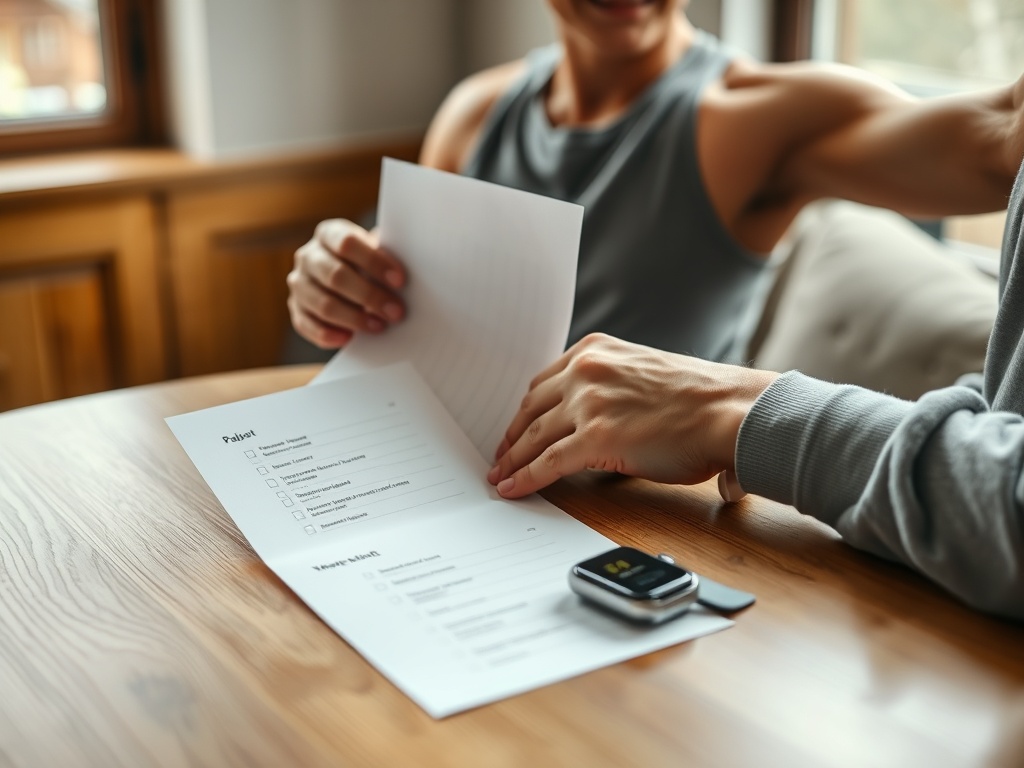
Beginners do not need a fitness tracker to make meaningful progress. A tracker can be useful when it answers a specific question or reinforces a simple habit, but it becomes counterproductive when the device creates more decisions, pressure, or data than the person can use.
TL;DR A good beginner setup is usually one goal, one behavior, and one feedback signal. Start with a simple routine first; add a tracker only if steps, workout consistency, heart-rate trends, or another metric will clearly help you act.
What a fitness tracker can actually do for a beginner
Consumer trackers can estimate or record steps, workout duration, heart rate, sleep-related signals, and other activity metrics. Those measurements are not the same as a medical evaluation, and accuracy varies by metric and device. Their practical value is behavioral: they can make activity visible, prompt a person to move, and provide a record that is easier to review than memory alone.
That can be useful because the basic target for most adults is not complicated. The CDC's current adult activity guidance recommends at least 150 minutes of moderate-intensity aerobic activity each week plus muscle-strengthening activity on at least two days. A tracker may help someone see whether their routine is moving in that direction, but the device does not create the routine for them.
Research supports a measured view. Reviews of wearable interventions suggest that trackers can increase conscious activity such as daily steps or moderate-to-vigorous activity for some users, while the effect depends on the person and how the device is used. A systematic review of wearable activity trackers found benefits for some activity outcomes but also showed that trackers are not a universal solution for sedentary behavior or long-term habit formation.
The simplest decision test: what problem are you solving?
Before buying or wearing anything, identify the problem in one sentence. “I forget to walk during workdays” is a tracker-friendly problem because a step count or movement reminder can support action. “I do not know what workout to do” is different; a watch cannot replace a clear training plan. “I feel anxious when numbers are below target” may be a reason to use fewer metrics, not more.
- Use a tracker if you want a visible cue for one behavior such as walking, weekly workout frequency, or exercise duration.
- Keep it simple if you already follow a routine consistently and extra data will not change what you do.
- Delay advanced metrics if you cannot explain how a readiness, recovery, calorie, or sleep score will change today's decision.
- Choose comfort and ease of use over a long feature list. A device you dislike wearing will not produce useful longitudinal data.
This is also why beginners should read why tracking everything can hurt adherence for some people before turning every workout, meal, step, and sleep period into a score. More measurement is not automatically more control.
A practical three-level setup
Level 1: no wearable
Use a calendar, paper note, or simple phone checklist. Record only whether the planned activity happened. For many beginners, “walked 25 minutes” or “completed strength session” is enough information to build consistency. This level has almost no setup friction and keeps attention on behavior rather than optimization.
Level 2: one useful metric
If a single measurement helps, choose one. Step count works well for people trying to move more across the day. Workout duration can help someone establish regular sessions. Heart rate may be useful for people who understand intensity zones, but perceived effort can also guide many beginner workouts. If you are building a lifting habit, the workout itself matters more than keeping a wrist display active during every set; the principles in the best warm-up for heavy strength sessions are a better place to focus attention before loading gets challenging.
Level 3: trends, not daily judgments
Once the routine is stable, use longer-term trends. Compare several weeks of steps, workout frequency, or resting measures rather than treating one unusual day as a verdict. Consumer wearables can produce noisy readings because of fit, movement, skin contact, algorithms, and other factors. Trend thinking reduces the temptation to overreact.
Common mistakes that make tracking harder than training
The first mistake is buying for features rather than purpose. A beginner who wants a walking reminder does not need a complicated training ecosystem. The second is treating estimated calories as permission to eat more or as a precise measure of energy expenditure. Calorie estimates from wearables can be uncertain, so they should not be treated as exact accounting.
A third mistake is obeying a device when your body is sending a clearer signal. Pain, unusual shortness of breath, dizziness, illness, or marked fatigue deserve judgment that is broader than a colored score. A fourth is letting streaks control the plan. Rest days, schedule disruptions, travel, caregiving, and recovery are normal parts of a sustainable routine.
A fifth is failing to reduce friction. If charging, syncing, notifications, app menus, or data review take more mental energy than the benefit you receive, simplify. The same principle applies beyond wearables; reducing digital friction can make exercise support feel quieter and more useful.
How to know if the tracker is earning its place
After two to four weeks, ask three questions: Did I become more consistent? Did the metric change a real decision? Do I feel more informed rather than more pressured? If the answers are mostly yes, keep the device and ignore features you do not need. If the answers are no, remove notifications, hide unnecessary metrics, or stop wearing it for a trial period.
The best beginner tool is the one that makes the next healthy action easier. For some people that is a watch. For others it is shoes by the door, two strength sessions on a calendar, or a walking route they enjoy. Start with the behavior, then choose technology only when it supports that behavior.
Privacy and data are part of the buying decision
A fitness tracker is also a data-collection device. Before choosing one, review what the company stores, whether location or health-related data can be shared with third parties, how long information is retained, and which permissions can be disabled. You do not need to become a privacy expert, but you should know whether the convenience is worth the information you are giving the service.
If you only need a timer or step estimate, a phone-only setup may collect less new information than adding another wearable account. Simplicity can therefore reduce both cognitive friction and the number of systems holding your data.
A low-friction starting point
For the next week, pick one repeatable activity target and record completion in the simplest way available. If you repeatedly wish you had a specific piece of information, that is the signal to consider a tracker. If not, keep the routine simple and invest your attention in doing the work rather than measuring it.